Tuesday, May 12, 2020
‘We Are Used to a Virus Called Bombs’
The coronavirus will ravage a resilient Somalia—with ripples far beyond its borders.
The coronavirus will ravage a resilient Somalia—with ripples far beyond its borders.
By
Subban Jama and Ayan Abdullahi
Tuesday, May 12, 2020
‘We Are Used to a Virus Called Bombs’
The coronavirus will ravage a resilient Somalia—with ripples far beyond its borders.
By
Subban Jama and Ayan Abdullahi
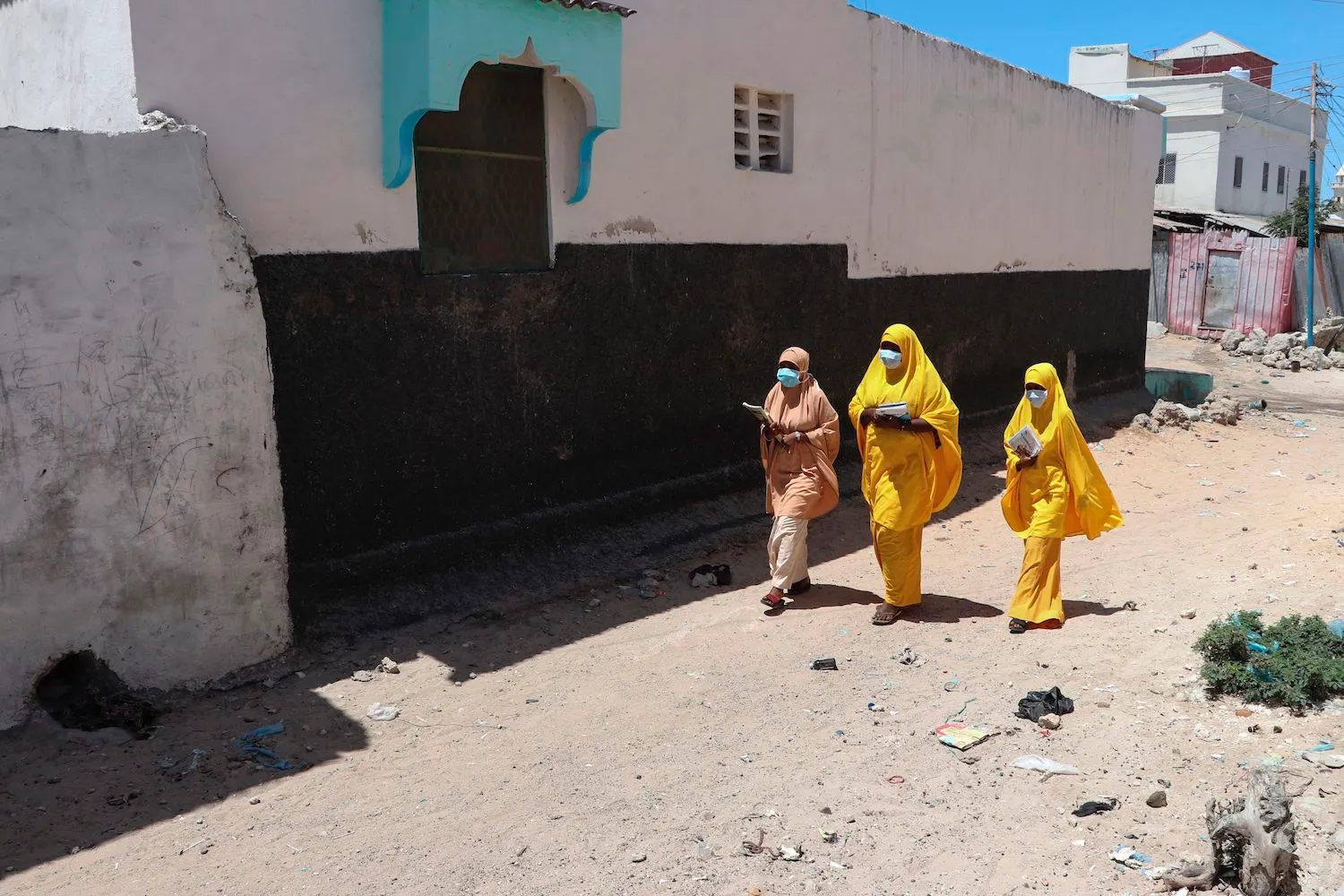
For close to three decades, Somalia has been spinning on a crisis carousel: war, famine, terrorism, climate stress. Now, the coronavirus pandemic is set to steer the country towards another hemorrhaging of human life. Even with a youth population above 70 percent, the virus will likely compound Somalia’s chronic medley of miseries. With each passing day, an uneasy question looms large: If the pandemic has left such death and upheaval in its wake in the world’s most powerful countries, what impact will it have on one of the world’s most fragile?
Few countries are less prepared for a COVID-19 outbreak than Somalia. And yet, paradoxically, few countries are better prepared for it—not because of health systems or prevention measures, but because of a psychological readiness for catastrophe. Extreme violence has long been a fact of daily life in Mogadishu, under siege by one of the deadliest terrorist groups in Africa, al-Shabab, which, by conservative estimates, has killed more than 3,000 people in the past five years and wounded tens of thousands in the past decade. Somalis, often touted for their resilience amid unrelenting adversity, are no strangers to mass loss of life.
—-
Subban Jama is a lawyer and Somalia justice specialist.
Ayan Abdullahi specializes in security, policy, and governance matters and has worked in Iraq and Somalia. Her concentration centers on post-conflict countries, with interests in geopolitics and its influence on policy formation and development in the Horn of Africa.
For close to three decades, Somalia has been spinning on a crisis carousel: war, famine, terrorism, climate stress. Now, the coronavirus pandemic is set to steer the country towards another hemorrhaging of human life. Even with a youth population above 70 percent, the virus will likely compound Somalia’s chronic medley of miseries. With each passing day, an uneasy question looms large: If the pandemic has left such death and upheaval in its wake in the world’s most powerful countries, what impact will it have on one of the world’s most fragile?
Few countries are less prepared for a COVID-19 outbreak than Somalia. And yet, paradoxically, few countries are better prepared for it—not because of health systems or prevention measures, but because of a psychological readiness for catastrophe. Extreme violence has long been a fact of daily life in Mogadishu, under siege by one of the deadliest terrorist groups in Africa, al-Shabab, which, by conservative estimates, has killed more than 3,000 people in the past five years and wounded tens of thousands in the past decade. Somalis, often touted for their resilience amid unrelenting adversity, are no strangers to mass loss of life.
—-
Subban Jama is a lawyer and Somalia justice specialist.
Ayan Abdullahi specializes in security, policy, and governance matters and has worked in Iraq and Somalia. Her concentration centers on post-conflict countries, with interests in geopolitics and its influence on policy formation and development in the Horn of Africa.
Related Blogs
Related Blogs
By
Sagal Abas Bafo
via
African Feminism
By
Sagal Abas Bafo
via
African Feminism
By
Sagal Abas Bafo
via
African Feminism
By
Sagal Abas Bafo
via
The New Humanitarian
By
Sagal Abas Bafo
via
The New Humanitarian
By
Sagal Abas Bafo
via
The New Humanitarian