Sagal Abas Bafo
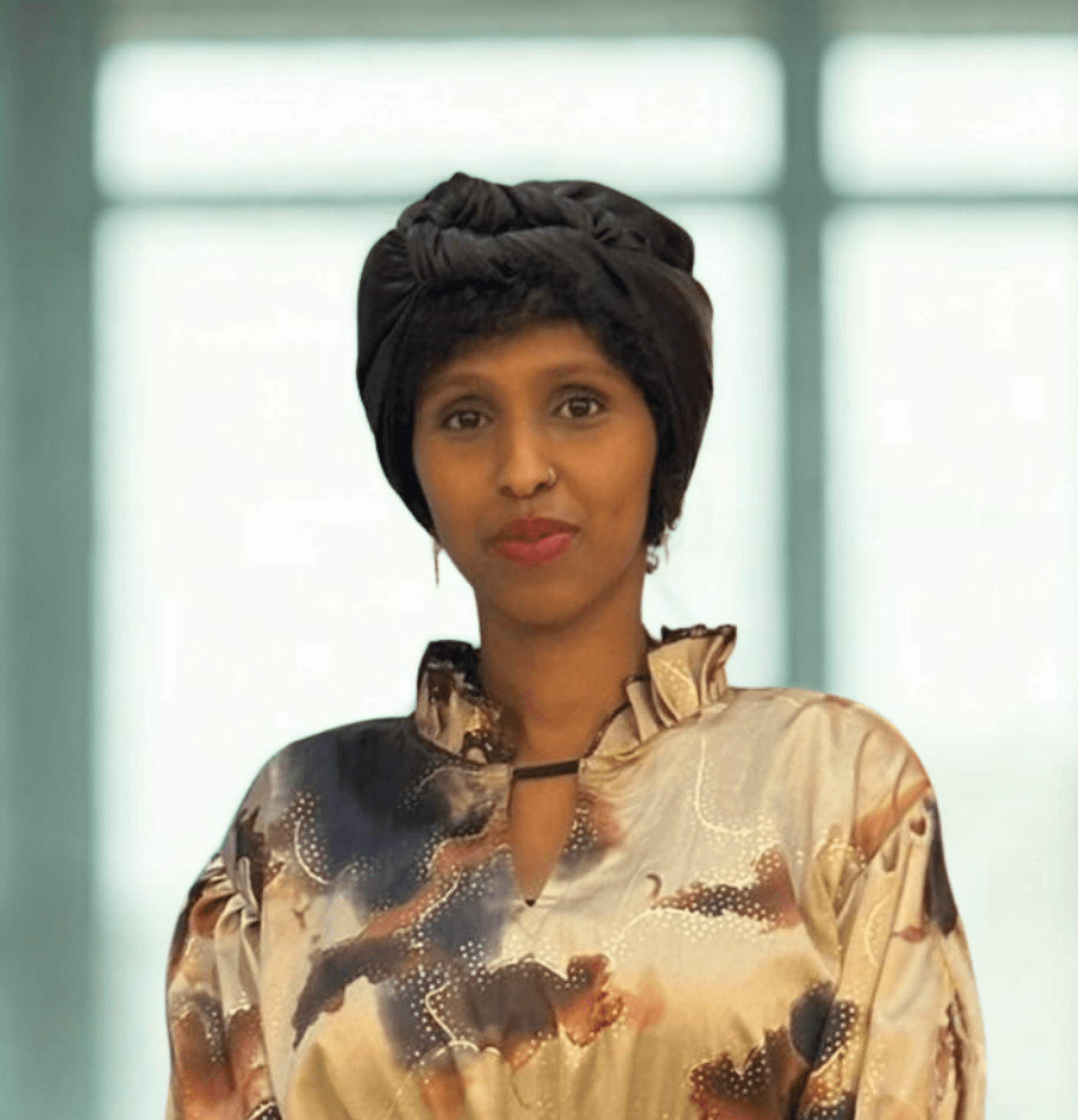

Sagal Abas Bafo is a humanitarian–development–peace nexus specialist with more than a decade of experience designing and supporting gender-responsive, inclusive, and community-driven programmes. She has worked across Yemen, Sudan, Nigeria, Myanmar, Somalia, and parts of Latin America, shaping initiatives that strengthen social cohesion, gender equality, and conflict resilience.
Her expertise spans gender-responsive governance, transitional justice, atrocity prevention, civic participation, and urban social cohesion. She has contributed to multi-country initiatives funded by the Dutch MFA, Wellspring, the Robert Bosch Foundation, FCDO, Oxfam, and WPHF—supporting national CSOs to address structural violence, expand civic space, support survivor-centred justice, and influence policy and systems reform. This includes Yemen’s five-year WPS programme, the OKP-funded transitional justice learning programme with the Hague Academy, and inclusive humanitarian and HLP-focused work with NRC Somalia.
Across contexts, Sagal provides analytical, programmatic, and advocacy support that helps local partners transition from emergency response toward resilience, recovery, and systems strengthening. She promotes practical creativity and evidence-driven approaches that challenge exclusion, elevate local leadership, and centre community agency.
At CUSI, she brings expertise in nexus programme design, policy advocacy, and inclusive community engagement. She supports CUSI and its partners—including municipalities, civil society, INGOs, and private stakeholders—to place communities at the centre of building equitable, safe, and future-ready cities. Her work draws on inclusive peacebuilding, transitional justice, and locally led reconstruction to rebuild trust, activate public spaces, and strengthen social cohesion in post-conflict urban environments.
Sagal holds a BA in International Relations & Development (University of Westminster) and an MSc in Conflict, Rights & Justice (SOAS), where her research examined Somalia’s peacebuilding trajectory and potential transitional justice pathways for future recovery.